

on losing track of my rectum (and other problems)
TW: my version of TMI is Tell Me Instantly (bonus October newsletter)


Hello and welcome to a bonus newsletter on a topic very near (derogatory) to my heart: the slow but very real descent of a few of my vital organs on my pelvic floor. Perhaps you’re thinking, I don’t want to read about my third favorite poet’s rectum. I hear you. Feel free to skip this post. I have a feeling, however, that some of you may relate, or at the very least, know someone who can.
In case you didn’t know, pelvic floor dysfunction (PFD) is as common as high blood pressure. In the US, one in three women will experience PFD in her lifetime, which includes super fun things like urinary incontinence, fecal incontinence, and pelvic organ prolapse. Despite its frequency, many suffer quietly due to the stigma and embarrassment, often waiting years before seeking help. Interestingly, men are also affected by PFD, with studies indicating that around 16% experience some form of it in their lifetime.
In my upcoming book, How About Now, I allude to a few of my health struggles over the last few years. Some of them I’ve kept private, others, like this one, have been too wild not to share.
But first, let’s start at the beginning.
It’s 2017, my third and final baby just turned one, and everyone is exhausted. Three kids under six when you’re broke, sleep-deprived, and trying to make it through later-in-life med school and freelance editing jobs is a lot. It’s also beautiful. I’m a baby person, so I revel in all the last baby things, carting around my youngest in a used Ergo carrier off Facebook Marketplace when he’s much too big and letting him nap on me in the afternoons.
I also know we’re at a breaking point, morale teetering on the edge on a daily basis. As a result, and despite using fertility drugs for all three pregnancies, my husband schedules a vasectomy to make our family of five complete.
Two weeks before that appointment, we get some news.
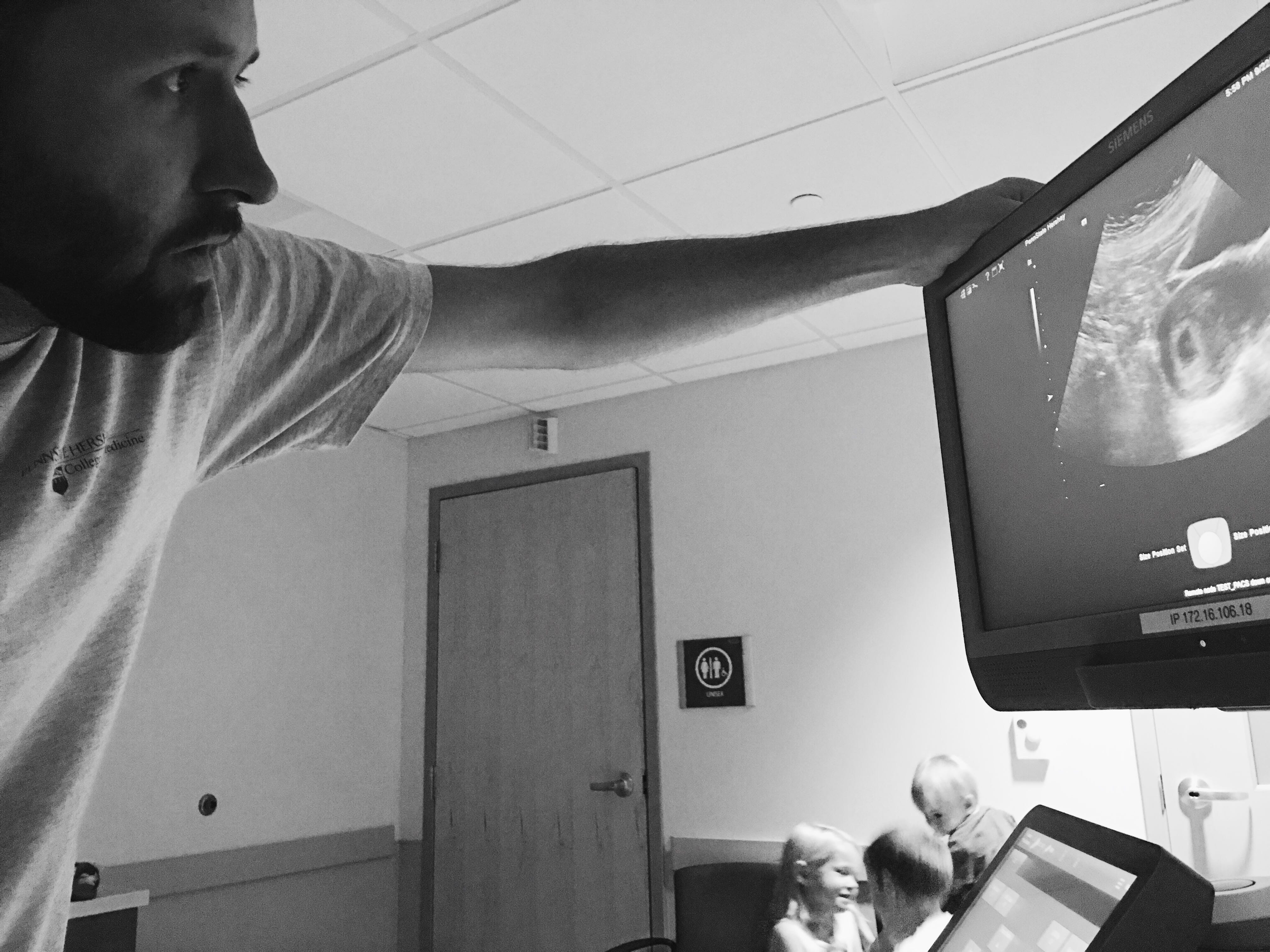
It’s a tale is as old as time. Still, I’ll never forget the evening I sink down on our couch after a harrowing bedtime routine and think, something’s not right. Ten minutes later, I hold a positive pregnancy test and weep into my husband’s arms. Nine months later, my fourth and final baby is born.
I’m depressed for the entirety of the pregnancy, and while some of the fog lifts once the baby is born, an eerie shadow lingers. It’s no wonder, then, that I’m out of touch with my body. So out of touch that I ignore the prolapse warning signs during both pregnancy and postpartum. Of course there’s intense pelvic pressure! I think. It’s my fourth baby! Of course it feels like my uterus is falling out of me! I reason. It’s my body telling me I’m incredibly stupid for having this many children!
There’s a lot of shame, blame, and deep dissociation. Nothing, including my brain, feels right, so why shouldn’t that part of my body feel broken too? I’m also pretty distracted by the four young lives in front of me. The running joke among our acquaintances is, “What’s one more?” To which I want to respond, A whole hell of a lot, actually!!!!
Yes, there are moments of joy, but overall the vibes are low, and six months into the four-kid-life, I can see the water rising. The choice is clear: either I put on a life vest or we all go down together.
I put on the vest.
When my youngest turns six months old, I stop breastfeeding, hire childcare, take on extra freelance jobs to pay for that childcare, and go back to work. It is the single best decision I’ve ever made, resulting in a #1 New York Times best-selling book, restored mental health, and yes, strangely enough—an improved pelvic floor.
This doesn’t mean it’s all cupcakes and rainbows. Life is messy, four kids is four kids, and while my pelvic floor does randomly improve, I do occasionally shit my pants in Costco. Still, I’m so grateful.
It isn’t until five years later, on the night of my youngest’s fifth birthday, that I revisit the damage that pregnancy did to my body. I’m in the shower singing along to a Carly Rae Jepsen song when I feel a lump—a bulge, if you will—protruding from my body. The feeling is so sickening I sink down against the shower wall to prevent the rest of me from hitting the floor.
My first thought is 1) there is definitely a tumor growing inside my vagina and 2) I will certainly die. My next thought is that if I ever touch whatever that was again, I will pass out, hit my head on the tile, and (once again) die. These dramatics are why my parents always assumed I’d be an actor.
It takes two months to see a doctor, a few more weeks after that to see a pelvic-floor therapist. It’s in these appointments I learn the following:
The prolapse I experienced in my final pregnancy has progressed.
My bladder, rectum, and uterus are all descending on my pelvic floor, causing the bulge as well as a host of other issues including leaky urine, pelvic pain, pelvic pressure, incomplete emptying of the bladder, constipation, UTIs, and bloating.
I will eventually need surgery.
Our health system and country has largely abandoned women when it comes to this issue.
To say I spiral would be generous. The descent of my organs doesn’t just reopen the wound of the fourth pregnancy, it collides with a handful of other unresolved health issues, compounding the sense that my body has become a problem I can no longer manage. I feel out of control, alone, and afraid.
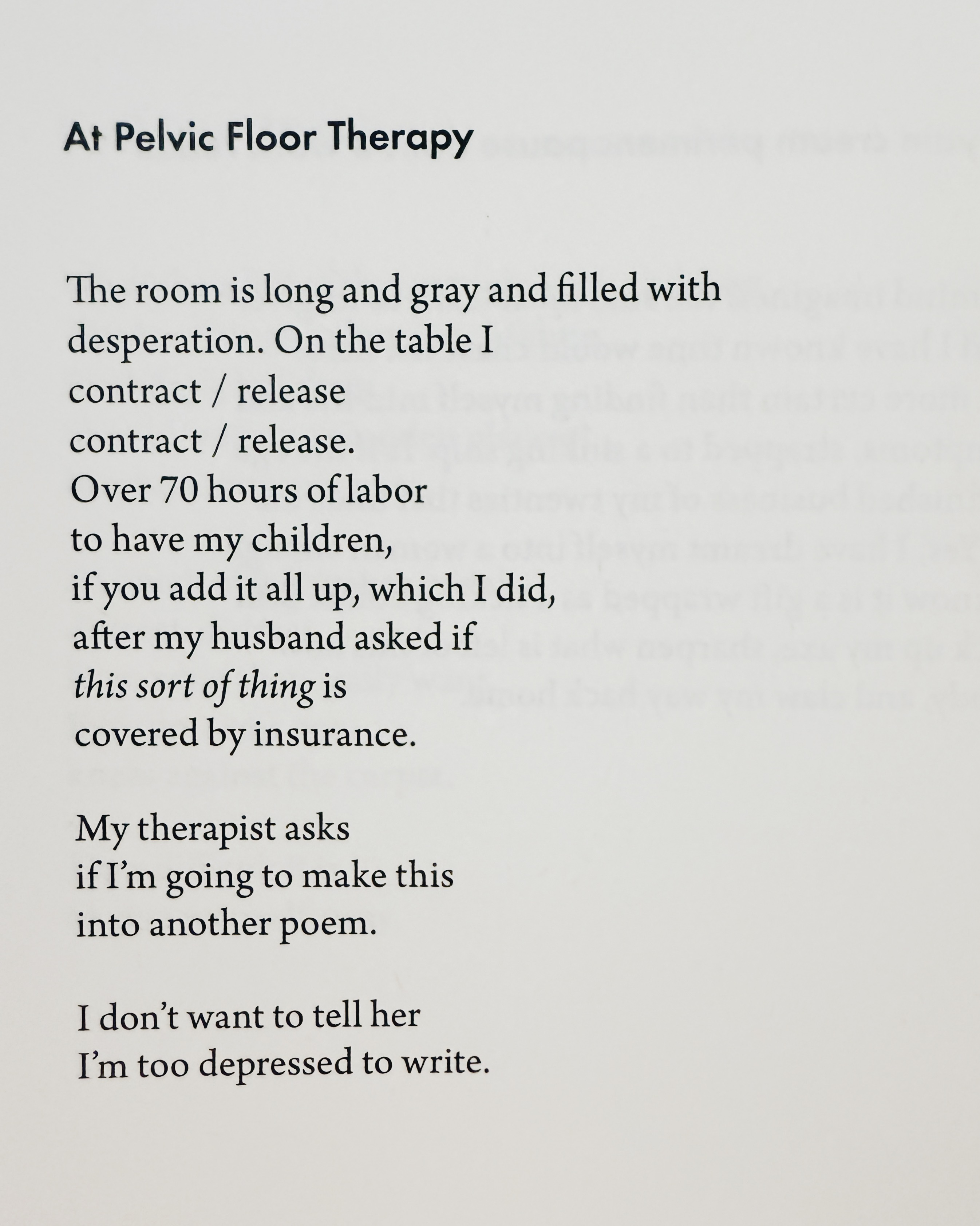
Half of all women who’ve given birth show signs of organ descent, yet most never talk about it, are never asked about it, and receive almost nothing in the way of prevention or early intervention. And when women do speak up, they’re often met with long waits and short appointments, their “pressure” or “leaking” brushed off as minor inconveniences instead of the serious, life-altering conditions.
TLDR: Pelvic-floor issues are often dismissed until they become surgical problems. Learning this in real time as it was happening to me made me want to set everything on fire.
Despite being in a rotten mood during pelvic floor therapy, I give it a college try. And after three solid months, things improve. Instead of always feeling like I’m sitting on a bouncy ball, that feeling is now limited to my menstrual phase when everything gets extra “heavy.” Instead of constantly leaking pee and feeling bloated, it’s down to that one week a month as well. I also get fitted for a pessary (not for me, though I respect anyone who can) and find a female surgeon I trust for when I’m ready for reconstruction and months-long recovery.
I also talk with other women dealing with similar issues, and as always, this connection and understanding is the most healing. Hearing their stories, trading tips, and commiserating over the awkwardness of the “pelvic floor muscle strength assessment” makes this feel less like a personal failing and more like something we’re all figuring out together. If there’s one lesson I keep coming back to in this life, it’s nothing gets easier alone, but everything does when it’s shared.
Like all my books, How About Now is deeply personal. It came from a season still unfolding in real time, a time of unadulterated joy and deep peace, where every version of myself is allowed to breathe and live and play. And yet, like most seasons, it carries its own uncertainty, where my body falters and mortality arrives to remind me to pay attention. This book, and this life, are about learning to hold both.
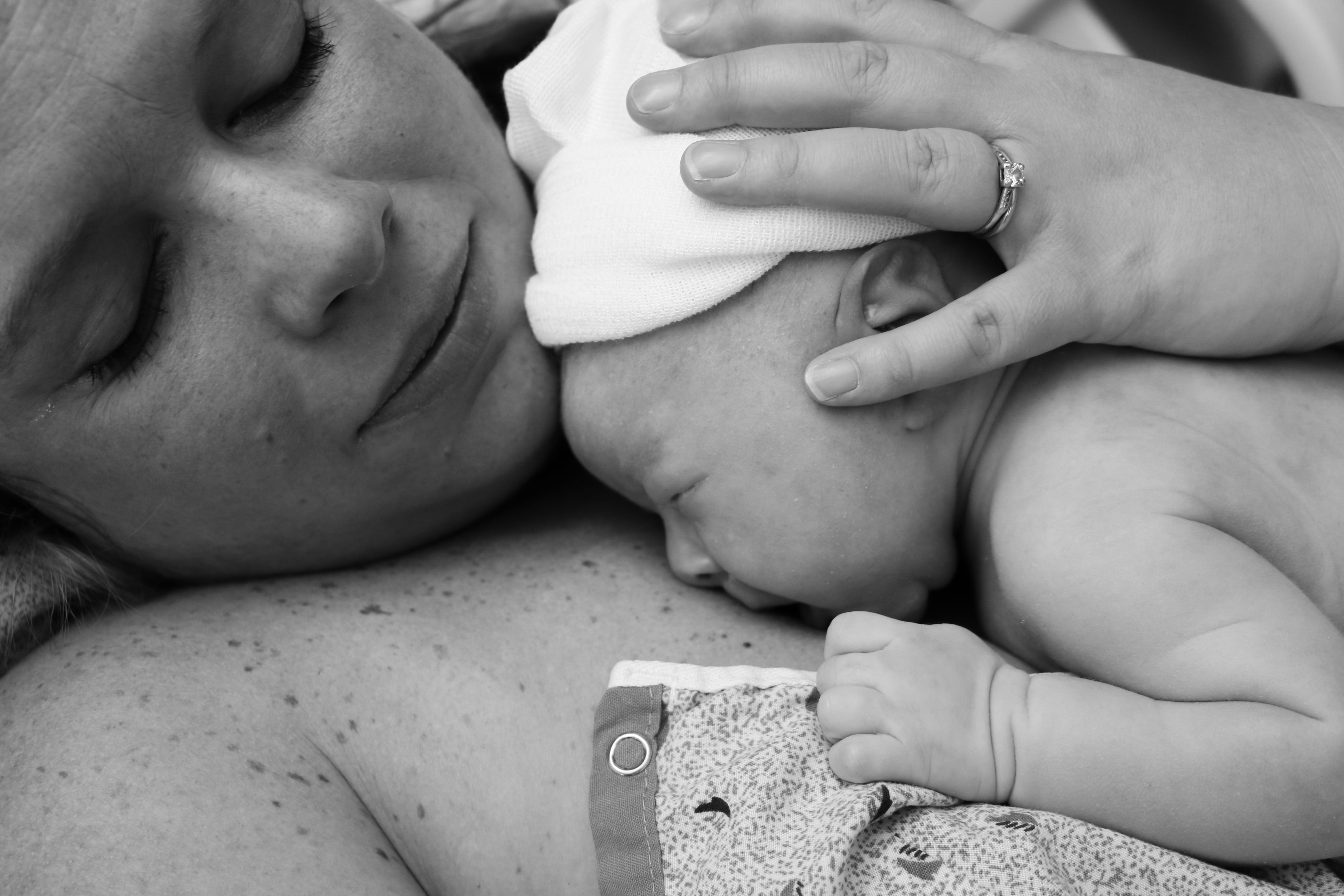
Did you know that in France, government-funded pelvic floor therapy is offered to every mother after giving birth because a) it’s a real thing and b) prevention is actually cheaper? Le sigh.
I have POP from just my first baby's birth...back in the early 1990s. What stays with me most is my visit to the supposed expert guy-I had to pay out of pocket for the consult-who makes an offhanded comment to me that "he doesn't see this issue with Black and brown women" (I'm white). I remember thinking: "yeah dumbass that's because probably a lot of them cannot afford your fee"